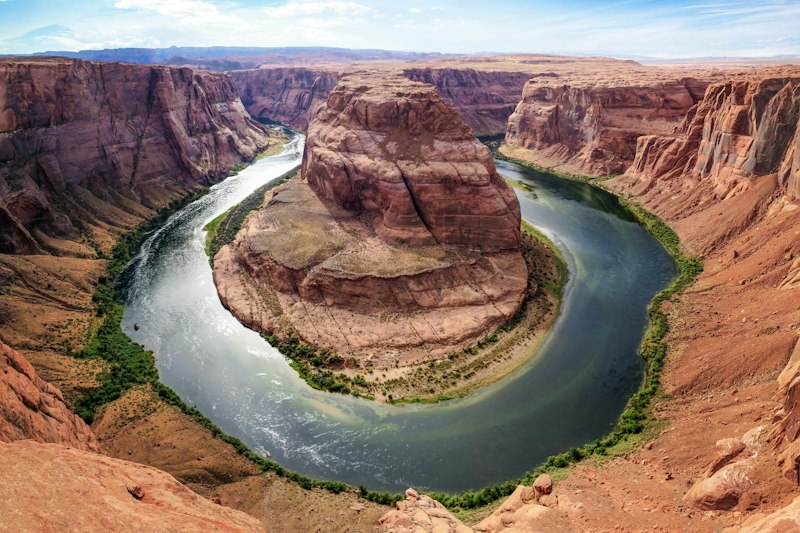
Witness One of Earth’s Greatest Natural Wonders
Nothing quite prepares you for your first glimpse over the rim of the Grand Canyon. Stretching 277 miles across northern Arizona and plunging over a mile deep, this geological masterpiece reveals billions of years of Earth’s history through vivid layers of red, gold, and ochre rock. Planning your trip requires choosing between the accessible South Rim and the rugged, remote North Rim.
🎒 Essential Travel Gear for Outdoor Adventures
Before hiking the canyon trails, gear up with Amazon’s top-rated hydration packs, hiking poles, and UV sun protection gear:
South Rim vs. North Rim: Which Should You Choose?
- The South Rim (Open Year-Round): The most popular destination, offering extensive paved rim trails, Grand Canyon Village historic hotels, multiple shuttle routes, and dramatic viewpoints like Mather Point and Desert View Watchtower.
- The North Rim (Open May to October): Higher elevation, cooler temperatures, dense aspen forests, and only 10% of total park visitors. Perfect for adventurous hikers seeking solitude.

Descending into the canyon reveals incredible scale, but always plan twice as much time for the climb back up.
Best Viewpoints for Sunrise & Sunset
- Hopi Point (South Rim): Jutting far out into the canyon, this vista provides an expansive westward view perfect for catching sunset light illuminating the Colorado River.
- Mather Point: Conveniently located behind the main Visitor Center, offering dramatic dawn lighting across towering canyon buttes.
- Lipan Point: One of the few viewpoints offering clear glimpses of the canyon’s geological fault lines and winding river rapids.
- Point Imperial (North Rim): The highest point in the entire park at 8,803 feet, overlooking Mount Hayden and the Marble Canyon gorge.
Vital Hiking & Safety Rules
- Never Attempt Rim-to-River in One Day: Summer temperatures inside the inner canyon regularly exceed 110°F (43°C). Pack plenty of electrolytes and salty snacks.
- Stay Hydrated: Carry at least 1 liter of water for every hour of hiking, and check the National Park Service website for seasonal water station updates.
- Dress in Layers: Rim temperatures can drop near freezing in the early morning and skyrocket by early afternoon.
Leave a Reply